A Sacred Place
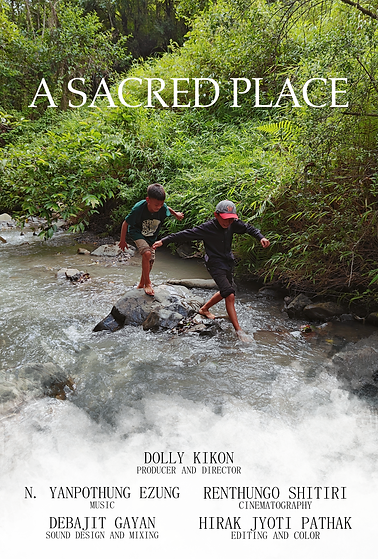
A Sacred Place (2026) tells the story of stones, spirits, and salt springs in Makhel. The film focuses on intergenerational storytellers and their relationship with the land. It integrates visual ethnography, oral tradition, and geological features of Makhel to center Indigenous pedagogy, community history, and ecology.
Makhel in Mao Naga language means a sacred place. Can sacredness exist amid ecocide in our times? Seeking an answer, the film follows life as it unfolds in the mountains of Makhel, a Naga village in northern Manipur. These mountains are composed of sandstones, shales, and siltstones. The sandstone monoliths across the landscape are symbols of ancient alliance and kinship between spirits and humans. The story of the land is also stored in the salt springs, ancient seawater retained in shale soil, a geological feature of these mountains. Geographically part of the Eastern Himalayas, the salt springs of Makhel were formed through sedimentation under an ancient equatorial ocean around 50 million years ago. Naga ancestors regarded these geological features as abodes for spirit custodians and cared for them. A Sacred Place is the story of land narrated by Naga storytellers, as humans prioritize relentless development forgetting their relationship with human and other beings.
Length: 40 minutes, 14 seconds
Country: India
Language: Mao Naga & English
Director: Dolly Kikon
About the Director
Dolly Kikon is a Naga anthropologist and Professor of Anthropology at the University of California, Santa Cruz. She has directed two films, Seasons of Life (2020) and Abundance (2024). She has written several books and essays on extractive resource regime, Indigenous ecology, militarization, and food culture in Northeast India.